
Last updated November 21, 2026
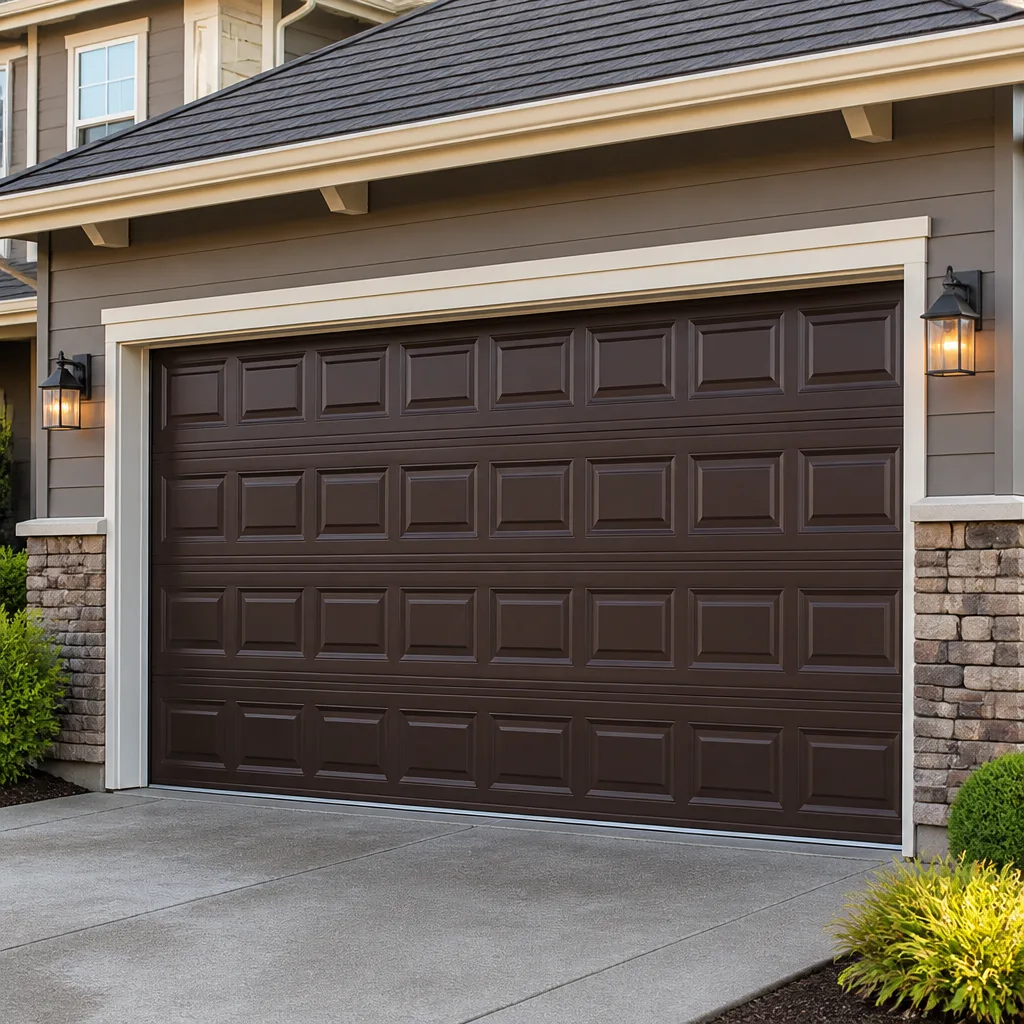 Raised-panel steel
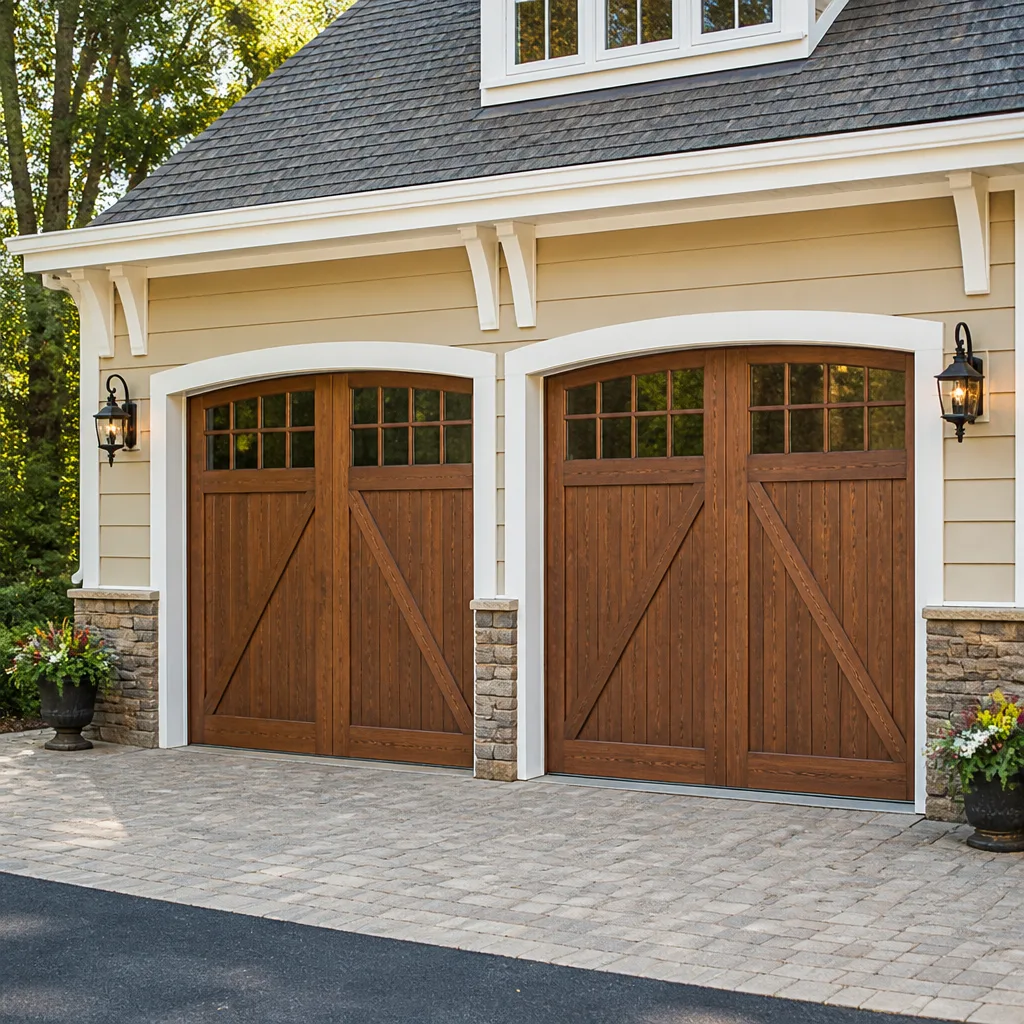 Carriage house
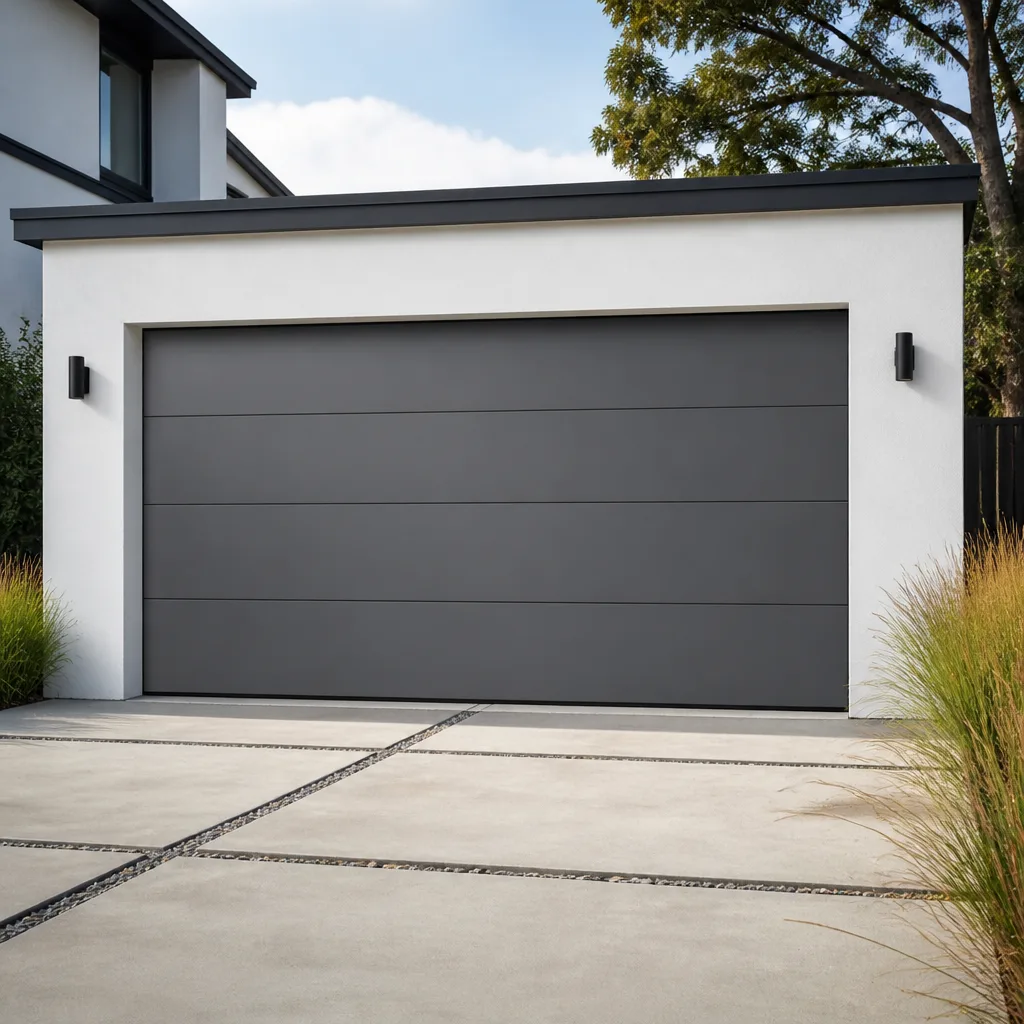 Modern flush
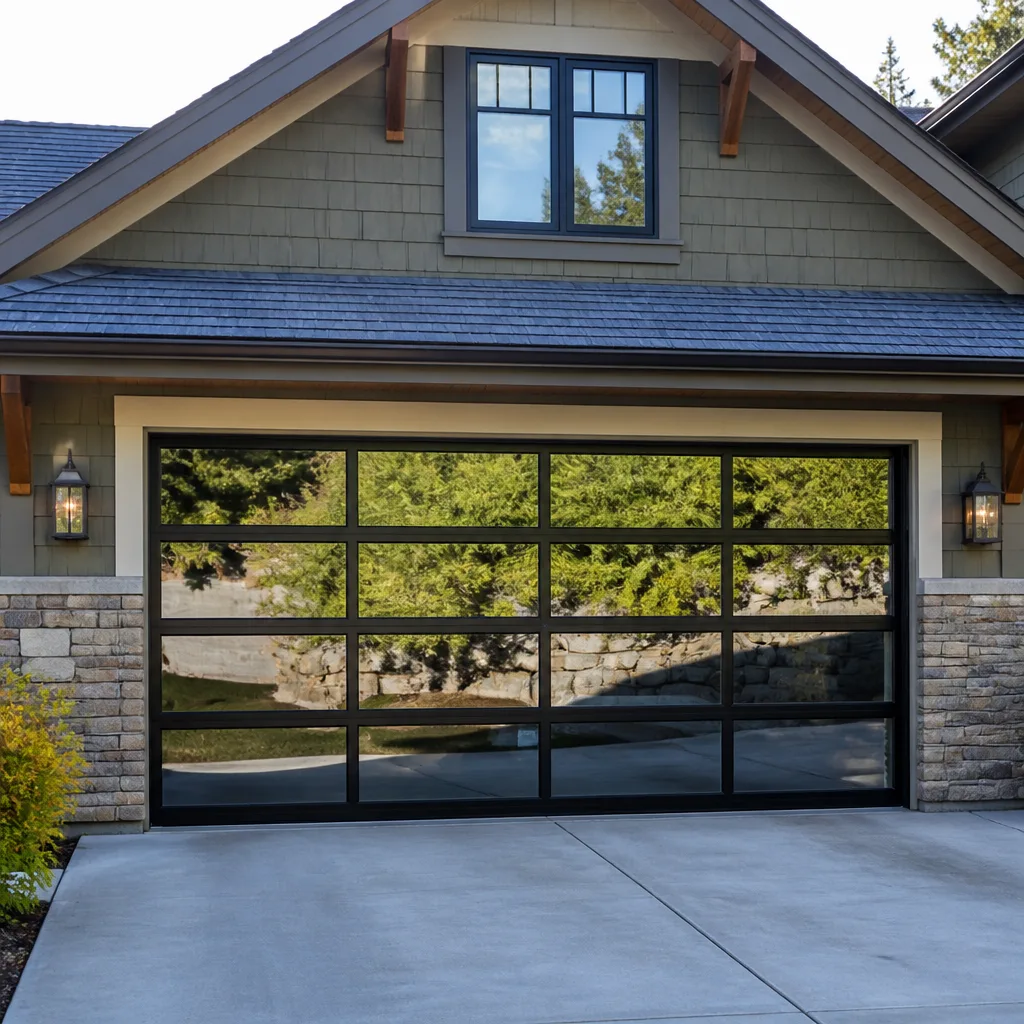 Full-view glass
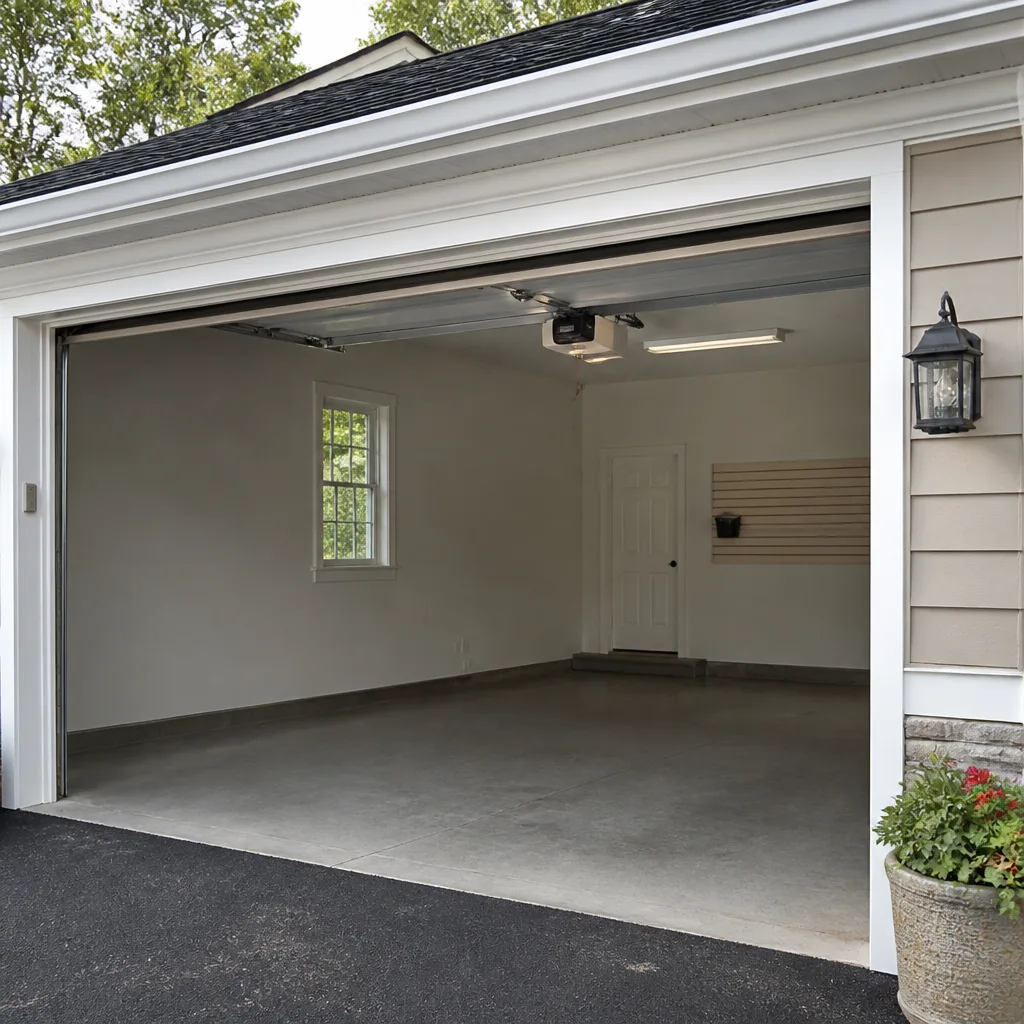 LiftMaster openers
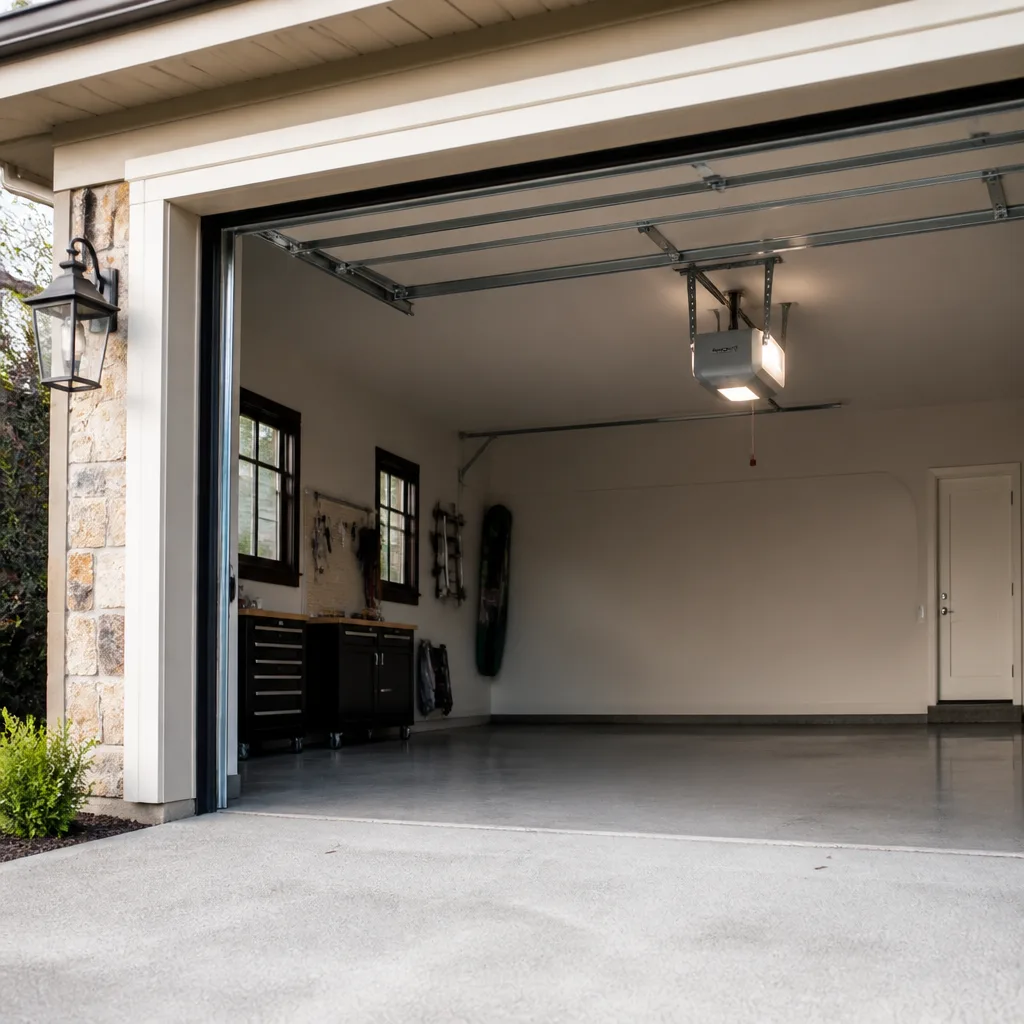 Chamberlain openers
Full 25-point door and opener safety check with every visit - springs, cables, rollers, tracks, and your LiftMaster or Chamberlain opener included
You get a price before we start. It does not change when the pro arrives.
Get your free estimateGarage Door Emergency Preparedness Guide for Manchester Homes
If your torsion spring breaks tonight and your car is inside, do you know the manual release procedure for your specific opener? Most people pull the red cord and then immediately create a second problem by letting a heavy door drop under its own weight. There’s a right way to do this, and it depends on which opener you own. A garage door failure in Manchester rarely happens at a convenient time. It happens in a cold snap, in the middle of a storm, or ten minutes before you need to leave for work. This guide walks you through the release procedures for the three most common opener types in Manchester homes, how to secure a stuck door without hurting yourself, what to do when a door jumps its tracks, and how to build an emergency card so a difficult call goes faster.
Quick Answer
Garage door emergencies are manageable when you prepare before they happen. Know your opener’s manual release procedure, keep a small emergency card with your door and opener details on hand, and understand which situations you can safely handle yourself versus which ones require a trained technician. In Manchester, broken springs and off-track doors are the two failures that most often need professional help, and both are dangerous to attempt alone.
Styles & brands we work with
- Raised-panel steel
- Carriage house
- Modern flush
- Full-view glass
- LiftMaster openers
- Chamberlain openers
Table of Contents
- Why Manchester Homeowners Should Plan Ahead
- Manual Release by Opener Type
- Securing a Door That’s Stuck Open
- What to Do When a Door Comes Off Its Tracks
- Building Your Garage Door Emergency Card
- Springs and Cables: The Parts You Never Touch
- Cold Weather and Storm Preparedness in Manchester
- What Emergency Service Involves
Why Manchester Homeowners Should Plan Ahead
Manchester’s housing stock runs from older colonials and capes near the center of town out to newer construction in the surrounding neighborhoods, and garage doors show up on nearly every one of them. That means most households have a car, a bike, holiday decorations, tools, or all four behind a door that gets cycled multiple times a day, every day, in every season. When that door stops working, the whole routine of the house stops with it.
The problem isn’t that doors fail. It’s that most people have never thought about what they’ll do when one does. They’ve never looked at the manual release on their opener. They don’t know whether their door uses torsion springs (the horizontal shaft above the door) or extension springs (running along the sides). They don’t know the model number of their LiftMaster or Craftsman opener. When something breaks at 11pm, they’re searching for answers in the dark with a flashlight in one hand.
Preparedness changes the whole experience. A homeowner who has spent twenty minutes thinking through the scenarios ahead of time is a homeowner who can secure the house, free the car if it’s safe, and make a clear call for help. The emergency becomes an inconvenience rather than a crisis.
A few facts worth knowing before we go further. Garage doors are heavy, often well over a hundred pounds, and the springs and cables that lift them store tremendous tension. That tension is what makes the door feel light when it’s working and what makes it dangerous when something breaks. This guide will show you what to check, what to secure, and when to stop and call a professional.
Manual Release by Opener Type
Every automatic garage door opener has a manual release, usually a red cord or handle hanging from the carriage that rides along the rail. Pulling it disconnects the door from the opener so you can lift the door by hand. The cord looks the same on almost every opener, but the safe way to use it depends on the door and the opener.
The rule that applies to all of them: only pull the release when the door is fully closed. If the door is open or partly open and you pull the release, the door can come down hard under its own weight. People get hurt this way every year. If the door is already open and stuck, don’t pull the release. Leave it there and secure the opening another way until help arrives.
Here’s how the release works by opener type, with the caveat that these are general procedures. If anything feels wrong, stop.
Chain-Drive Openers (Common on LiftMaster and Craftsman Units)
- Make sure the door is fully closed and nobody is standing under it.
- Pull the red release cord straight down and slightly toward the door. You’ll hear or feel the carriage disengage from the rail.
- Lift the door slowly by hand, using the lift handle at the bottom, keeping fingers away from the hinges and panel gaps.
- If the door feels very heavy, stop lifting. That’s a sign a spring has failed, and lifting a door with no spring support can cause injury or drop the door.
Belt-Drive Openers (Common on Quieter Wayne Dalton and LiftMaster Setups)
- Confirm the door is fully closed.
- Locate the release cord hanging from the trolley. On some belt-drive units the release is a lever rather than a cord. Pull the cord or flip the lever.
- Test the door by lifting it a few inches. It should feel balanced. If it feels heavy, close it and stop.
- Once open, prop nothing against the door and don’t leave it partly raised for long periods, since the panels can sag.
Screw-Drive and Smart Openers (Common on Newer Raynor and Wi-Fi-Connected Units)
- Check the door is fully closed.
- Pull the red emergency release handle. On some smart openers there’s a small lever near the motor head instead.
- If the opener is connected to an app, don’t try to run it remotely while the release is engaged. The opener can re-engage the carriage unexpectedly, so leave it in manual mode until a technician inspects it.
- Once your car is out, close the door by hand and lock it if possible until repair.
Manual release gets you in and out of the garage. It doesn’t fix the problem. If the door is heavy, if the opener won’t re-engage, or if you hear grinding or scraping during the lift, it’s time to call for garage door repair.
Securing a Door That’s Stuck Open
A door stuck open is a security problem and a weather problem at the same time, especially in Manchester where a winter storm can hit while you’re waiting for a technician. The instinct is to force the door down or block it with whatever’s handy, and that’s where people get hurt. The door is under tension, and it can drop or twist suddenly.
The safe approach is to secure the opening without fighting the door.
- Don’t force the door down. A door that won’t close by hand is telling you something is broken. Forcing it can bend panels, snap a cable, or knock the door off its track.
- Park a vehicle in front of the opening if the door is high enough to clear the roof. This blocks sight lines and deters most casual theft.
- Use a heavy board or a piece of plywood across the opening if the door has to stay closed for a short period and you can secure it without lifting anything overhead.
- Lower the door by hand only if it moves smoothly and stays balanced. If it feels heavy or fights you, let it stay where it is.
- Turn off automatic locking and motion sensors so the opener doesn’t try to cycle while the door is jammed.
- Cover the opening with a tarp from the outside if weather is coming and the door will stay open overnight. This is temporary and shouldn’t involve climbing on the door.
If the door is stuck partly open and the weather is turning, a trained technician can often stabilize it or close it manually without damage. That’s the kind of call our team handles regularly in Manchester. If you’re unsure, call and describe what you see, and we can tell you whether to attempt anything or leave the door alone.
What to Do When a Door Comes Off Its Tracks
A door that comes off its tracks is one of the most serious garage door failures. One or more rollers have jumped out of the track, the door is leaning or twisted, and the spring and cable system is doing unpredictable things. This is the situation where doing the wrong thing doesn’t just worsen the repair, it puts you at genuine risk.
Here’s what’s safe to attempt:
- Stay clear of the door. Don’t walk under it, don’t try to lift it back into place, and don’t stand on either side of it if it’s leaning.
- If a car is inside, don’t move the door to get it out. Wait for a technician.
- Brace the door from the sides if it looks like it might fall, using a heavy board or sawhorse set up without standing under the door.
- Turn off the opener at the wall switch so nobody accidentally cycles it.
- Clear the area of kids and pets. Keep people well away until the door is stable.
Here’s what makes it significantly worse:
- Pulling the manual release and letting the door fall. This is common and it can bend panels, snap cables, and cause injury.
- Trying to lift or force the door back into its tracks. A heavy door on a broken track can shift suddenly.
- Trying to bend a track back into shape by hand. The track is sharp and under load, and bending it rarely helps.
- Cycling the opener to “see if it works now.” The opener will pull against the damaged track and can cause more damage.
If the door has come off track, this is the right time to call for help. Our team at Manchester Garage Door Repair Co treats off-track doors as a priority call because the risk of injury and further damage is real. Get the area clear, and call (888) 315-6660. We answer 24/7, with fast dispatch from 7am to 7pm, Sunday through Friday.
Building Your Garage Door Emergency Card
The single most useful thing you can do before an emergency is build a small card with the details a technician will ask for. Write it out, keep one copy taped inside the garage near the opener, and keep another with your home records. When your door won’t close at 10pm, you’ll want this information without having to hunt for it.
Include these items:
- Opener brand and model number. LiftMaster, Chamberlain, Genie, Craftsman, Wayne Dalton, Raynor and Amarr openers all have different release mechanisms and different parts. The model number is usually on a sticker on the back or underside of the motor housing.
- Door brand and style. Clopay, Amarr and Wayne Dalton are the most common door brands in this area. Note whether the door is insulated and roughly how many sections it has.
- Spring type. Torsion springs run on a shaft above the door. Extension springs run along the sides. Note which you have, and if you can see it, the color code painted on the torsion spring, which identifies its size.
- Approximate door width and height. A standard single door is about 8 or 9 feet wide. A double is about 16 feet. Height is usually 7 or 8 feet.
- What the door is doing. Won’t open, won’t close, opens part way, makes a loud bang, door is crooked, opener runs but the door doesn’t move. Brief and specific is best.
- Anyone inside the house who needs to get out. If a car is trapped or someone needs to leave for work or caregiving, tell the dispatcher so it can be prioritized.
- Your address and any gate or parking notes. A quick way in saves time.
Having these details in hand turns a panicked call into a five-minute conversation that gets a technician on the right track sooner. It also helps the person on the phone tell you what’s safe to do while you wait.
Springs and Cables: The Parts You Never Touch
Garage door springs and cables are under extreme tension and are not a DIY project. A torsion spring can store enough energy to cause serious injury if it releases suddenly, and a snapped cable can whip without warning. We say this without drama because it’s the most important safety point in this guide: leave spring and cable work to a trained technician.
What you can safely do:
- Look at the door and note whether the spring appears broken. On a torsion system you’ll see a gap in the coil above the door. On extension springs you may see a broken spring hanging loose at the side.
- Note whether any cables are loose or detached. Don’t touch them.
- Listen for the sounds that indicate a spring or cable failure: a loud bang, a metallic snap, or the door suddenly feeling very heavy when released.
What you shouldn’t do:
- Don’t try to unwind, tighten, or move a torsion spring. It requires winding bars and specific procedures.
- Don’t try to reattach or adjust cables.
- Don’t operate an opener on a door with a broken spring. The opener will strain against the door’s full weight and can damage the motor.
- Don’t pull the manual release to “help” if a spring is broken and the door is up. Doing so can drop the door hard.
Spring repair is one of the most technically demanding and safety-critical jobs in this trade, which is why we handle it as its own dedicated service. If you suspect a broken spring, don’t wait for a full failure. Call (888) 315-6660 and we can walk you through what to check and whether to schedule garage door spring repair. Estimates are free, and the price is quoted and agreed before any work starts.
Cold Weather and Storm Preparedness in Manchester
Manchester winters bring a specific set of garage door issues. Cold temperatures stiffen the lubricant in the tracks and rollers, which makes the door work harder. Snow and ice can build up at the bottom threshold and stop the door from closing. And the freeze-thaw cycle around the door can shift the ground enough to knock a bottom panel out of alignment.
Here’s how to prepare before the cold months hit:
- Test the door balance annually. With the opener disengaged and the door fully closed, lift the door by hand to about halfway. It should feel light and stay put when you let go. A door that feels heavy is telling you the springs are wearing out. Test only if you’re confident; otherwise have a technician check.
- Lubricate the rollers, hinges, and tracks with a garage door lubricant, not general-purpose oil. Do this in fall, before the cold locks everything down.
- Clear the threshold after storms. Ice and packed snow at the bottom of the door can stop it from closing and stress the opener.
- Check the bottom weather seal. A cracked or missing seal lets in snow, water, and cold air, and it puts extra strain on the door as it closes.
- Look at the tracks for ice and debris after a storm. Don’t chip at them with a sharp tool. A visual check is enough.
- Know where your manual release is in case the opener refuses to move the door after a cold snap.
If your opener acts up in cold weather, it may be the opener rather than the door. Smart and traditional systems both behave differently in the cold, and the fix isn’t always in the same place. Our garage door opener repair team works on LiftMaster, Chamberlain, Genie and Craftsman units, so it’s usually a matter of diagnosing the specific brand and part. If your opener won’t respond, we can help you figure out whether to schedule a repair or plan for a replacement.
What Emergency Service Involves
When your door fails, the price question is usually the first thing on your mind. The most important thing to know is that the price is quoted and agreed before any work starts, and the written estimate sets the final price. There’s no surprise invoice at the end.
Emergency garage door service in Manchester typically involves a diagnostic visit, identification of the failure, and a written quote for the repair before any work begins. What gets fixed depends on what’s broken:
- Spring failure usually requires spring replacement. A spring price range is per spring, and a matched pair is normally replaced together, so a pair costs roughly twice the single-spring figure. We confirm the specific quote once we see the door and the spring.
- Off-track door requires stabilizing the door, inspecting the tracks, rollers, and cables, and often replacing bent tracks or worn rollers. The quote depends on the extent of the damage.
- Opener failure ranges from a replaced gear or capacitor to a full opener replacement, depending on the brand and age of the system.
- Cable failure is repaired alongside spring work when the two are related, and it’s never a DIY job.
We don’t charge more for nights, weekends, or urgent calls. A repair that happens at 8pm costs the same as one that happens at 8am, and the quote you get is the price you pay. The service call itself is free to estimate. If you want to know what a repair will involve before you book, call (888) 315-6660 and we can talk through the likely cost range based on what your door is doing.
Some repairs are quick, like re-engaging a carriage or replacing a roller. Others, like a matched spring replacement or an off-track door recovery, take longer and involve more parts. Either way, we confirm the quote first and then do the work.
Common Mistakes to Avoid
- Pulling the manual release while the door is open. This is the most common mistake we see, and it’s the one most likely to hurt someone. Always release with the door fully closed.
- Forcing a door back into its track. A heavy door off-track can shift suddenly and cause injury. Leave it to a technician.
- Cycling the opener on a broken spring. The opener isn’t designed to lift the full weight of the door. Running it on a broken spring can burn out the motor or damage the gear.
- Trying to adjust the torsion spring yourself. This is genuinely dangerous. Winding and unwinding springs requires winding bars and specific procedures, and the spring can release without warning.
- Ignoring a door that feels heavy or won’t stay up. A door that needs help to lift is telling you the springs are on their way out. Waiting for a full break usually means a bigger repair later.
- Leaving the door open in a storm to “see if it works tomorrow.” A stuck-open door lets in water, snow, and cold, and it invites security problems. Secure the opening and call for help.
- Not having your model numbers ready when you call. A quick conversation saves time and gets the right part on the first visit.
See the difference
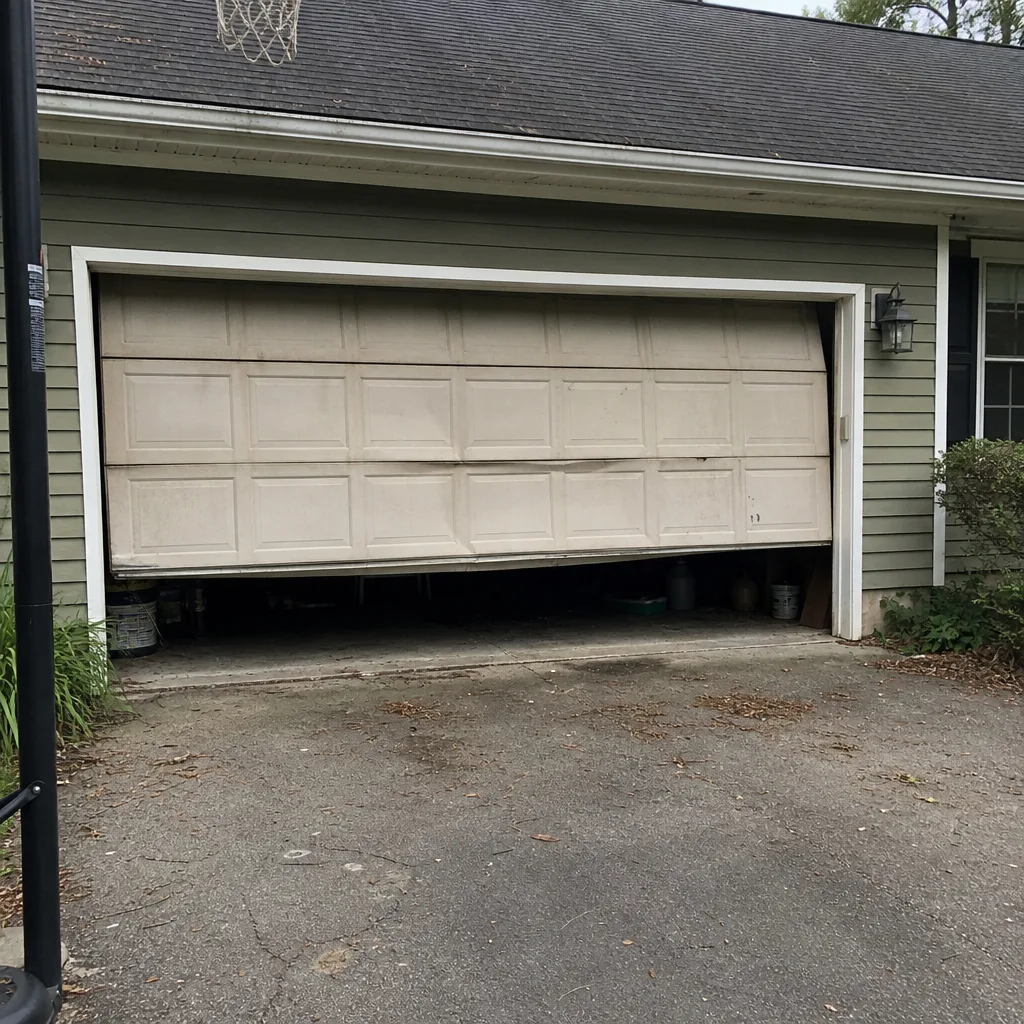 Before
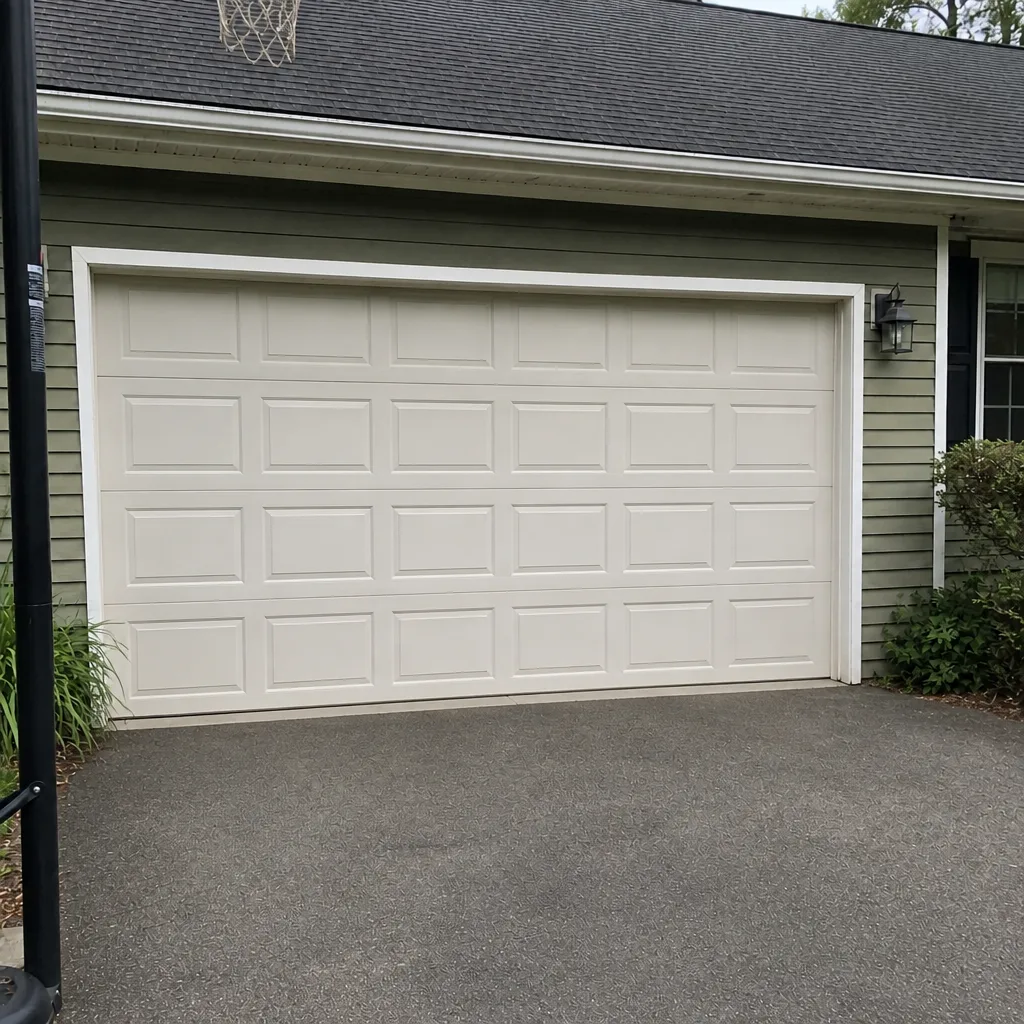 After
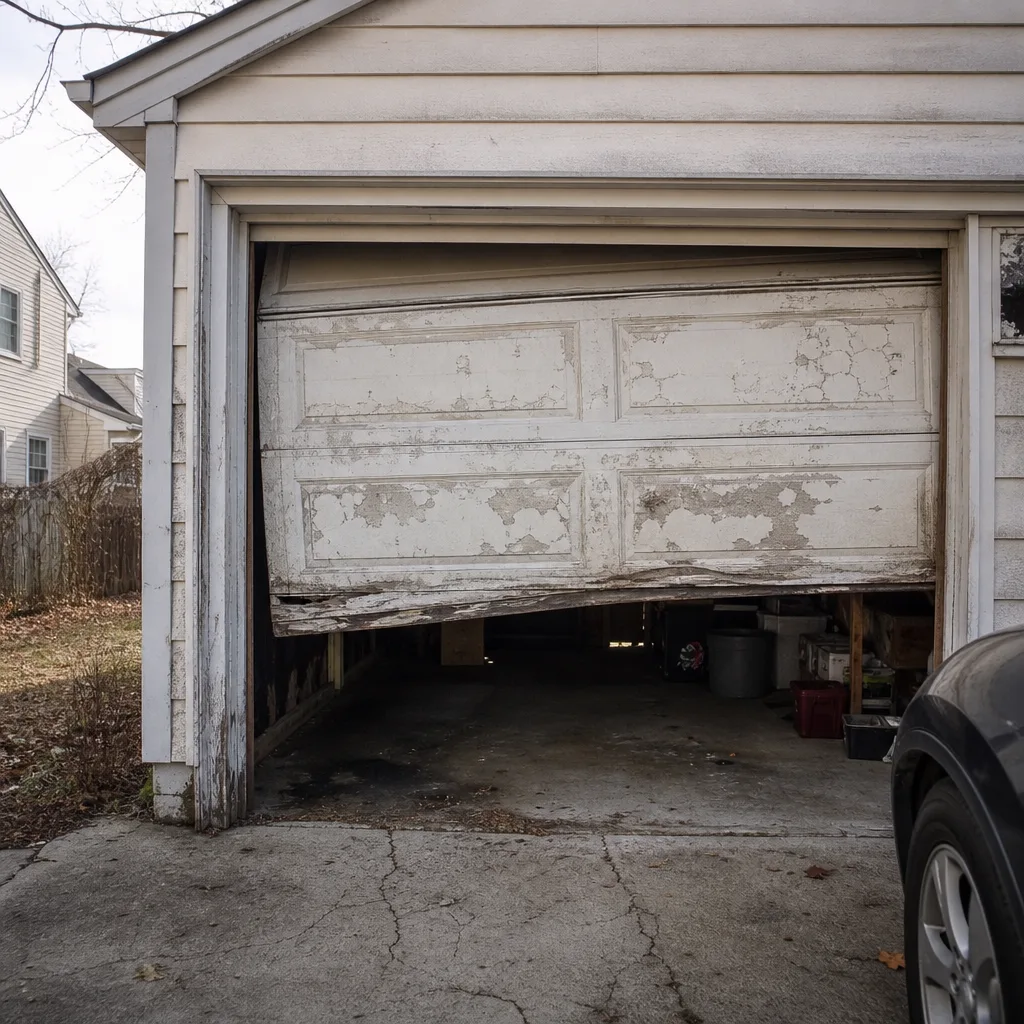 Before
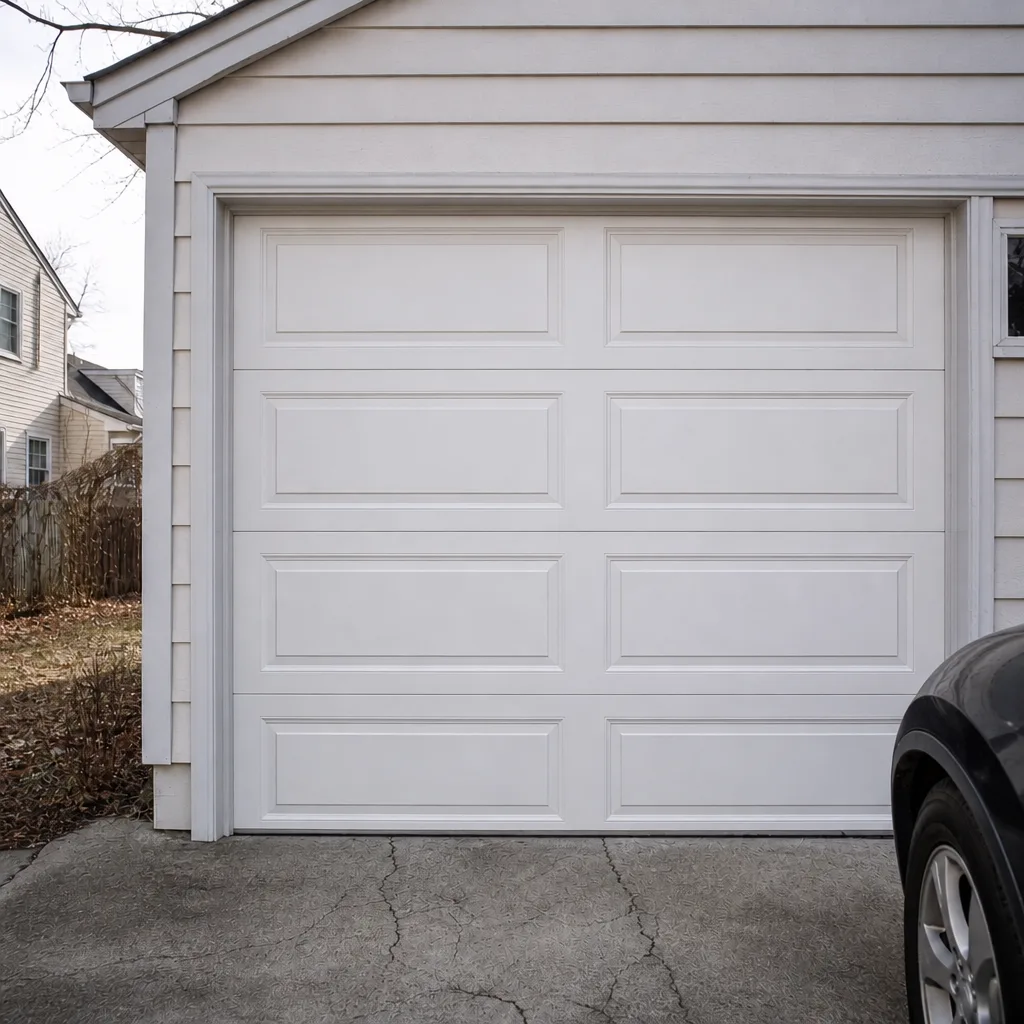 After
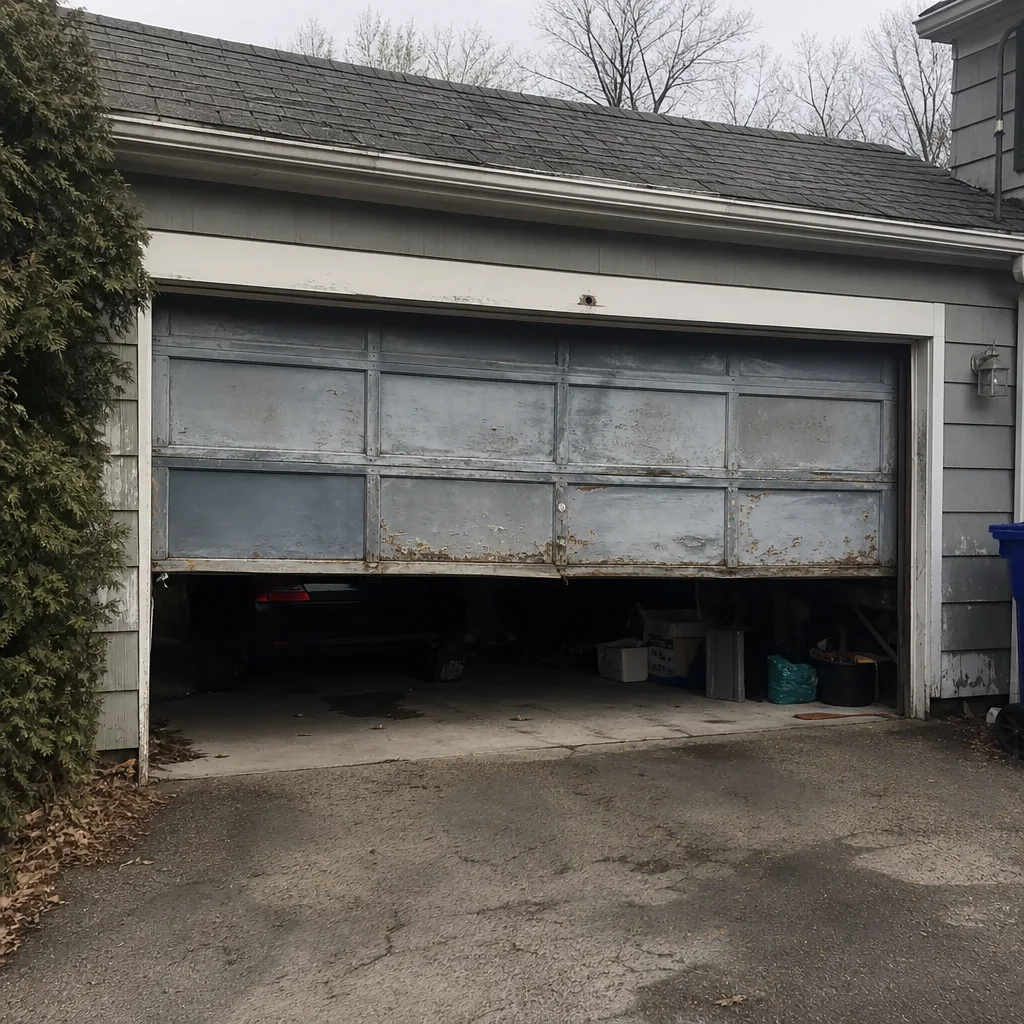 Before
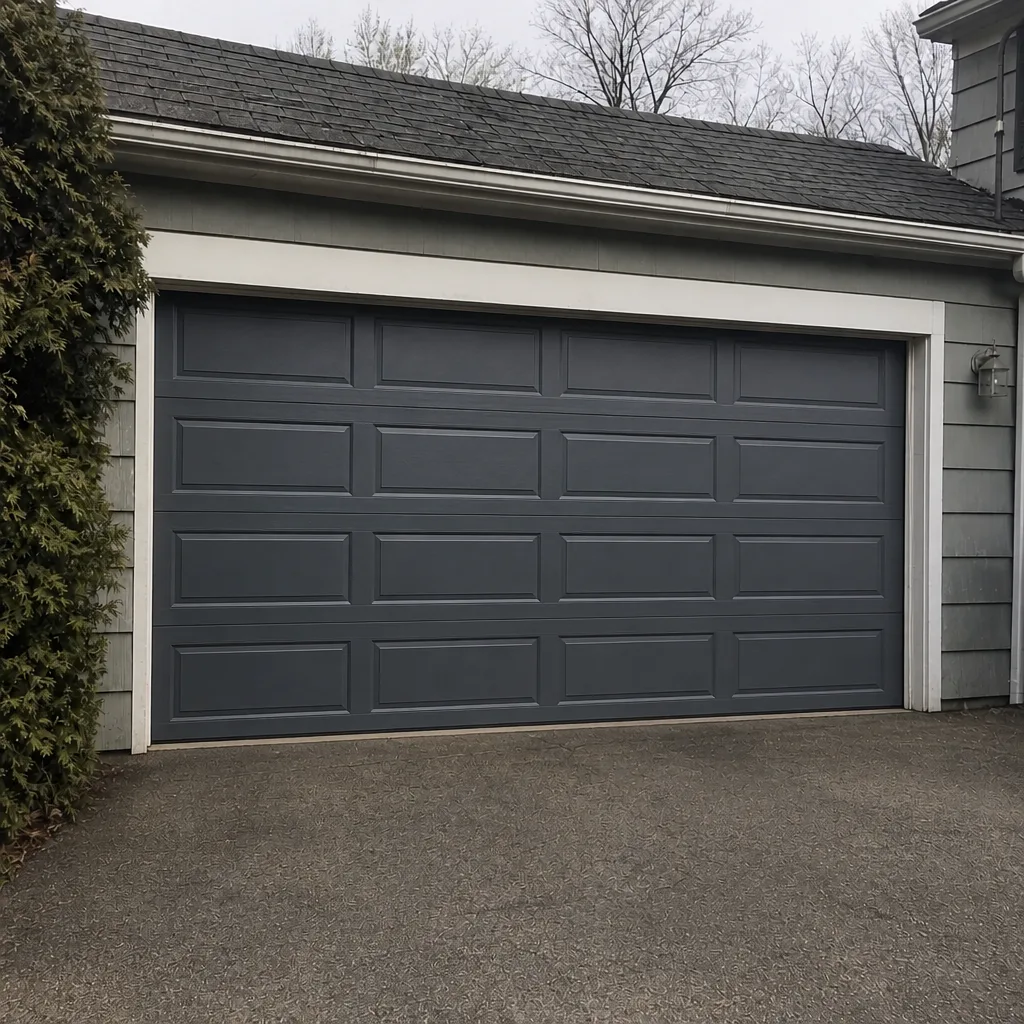 After
When to Call a Professional
Call a professional for any of these: a broken spring, a door that’s come off its tracks, a cable that’s snapped or loose, an opener that runs but won’t move the door, a door that’s dangerously heavy or won’t stay up, or any situation where you’re not sure what’s safe. Call sooner rather than later for a door stuck open in a storm or a car trapped inside, since those situations can be stabilized faster than they can be fixed later. Manchester Garage Door Repair Co offers free estimates in Manchester. Call (888) 315-6660. We answer 24/7. Fast dispatch from 7am to 7pm, Sunday through Friday.
Our technicians have up to 9 years of experience, and garage doors are all we do, which means every call is a garage door call. We work on LiftMaster, Chamberlain, Genie, Clopay, Amarr, Wayne Dalton, Craftsman, and Raynor equipment, so whatever system you already own, we’re set up for it.
Frequently Asked Questions
Yes, you can open the door by hand using the manual release, but only with the door fully closed. Pull the red release cord or lever to disconnect the opener, then lift the door slowly. If it feels heavy, stop and call for help.
Usually, yes. Spring repair is a standard call and often handled the same day, provided the right spring size is available. We confirm the quote before we start, so you know the price before we touch the door. Call (888) 315-6660 for an exact quote, and estimates are free.
Don’t force it. Secure the opening with a tarp or board from the outside if it’s safe to do so, park a vehicle in front if it clears the roof, and keep people away from the door. Then call for help. Our team handles storm-related garage door calls in Manchester regularly.
The local professionals we connect you with are licensed and insured as their state requires. We confirm credentials before booking. If you have a specific question, call (888) 315-6660 and we can walk you through it.
No. The price is set per job by the written estimate, and there’s no extra charge for emergency, night, or urgent calls. We answer 24/7. A call outside dispatch hours is booked into the next opening, Sunday through Friday, 7am to 7pm. Call (888) 315-6660 for an exact quote, and estimates are free.
Leave the door alone, clear the area, turn off the opener, and keep everyone away from the door until a technician arrives. Don’t try to lift or force it back. Call (888) 315-6660 and we can advise on whether to secure the opening or leave it as is.
The written quote is the price. If we uncover something beyond what was discussed, we explain it and get your approval before any additional work. You won’t get an invoice bigger than the quote without agreeing to it first.
We work on LiftMaster, Chamberlain, Genie, Craftsman, Wayne Dalton, Raynor, Clopay, and Amarr equipment, covering both traditional and smart Wi-Fi-connected openers. If you’re not sure what you have, the model number sticker on the motor will tell you.
The Bottom Line
Garage door emergencies are much easier to handle when you’ve thought about them in advance. Know your manual release and how it works for your specific opener. Only release the door when it’s fully closed. Keep a card with your opener model, door brand, spring type, and door dimensions near the garage, so the call for help is quick and clear. Never touch springs or cables yourself, and call for help the moment a door is off-track, heavy, or stuck open. Have (888) 315-6660 saved in your phone. We answer 24/7, with fast dispatch from 7am to 7pm, Sunday through Friday.
Written by the team at Manchester Garage Door Repair Co.