
Last updated November 21, 2026
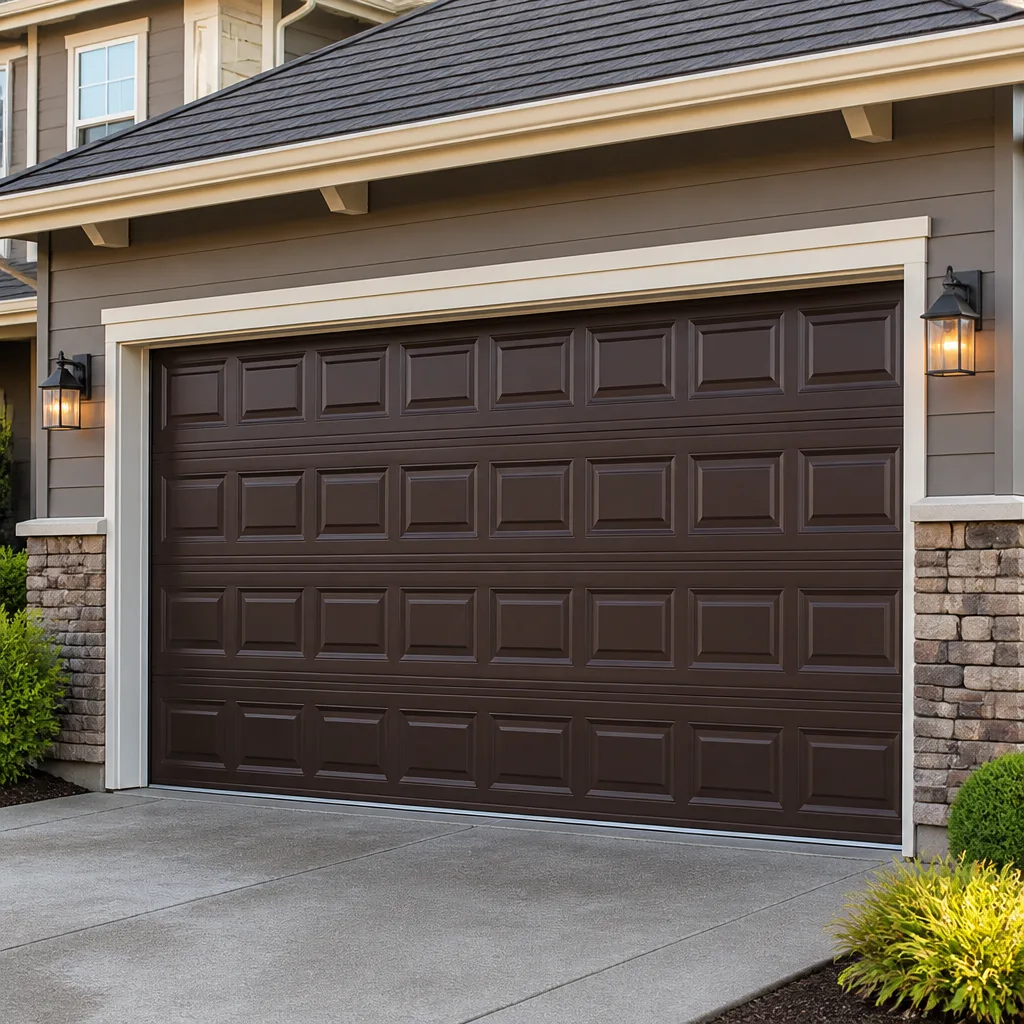 Raised-panel steel
 Carriage house
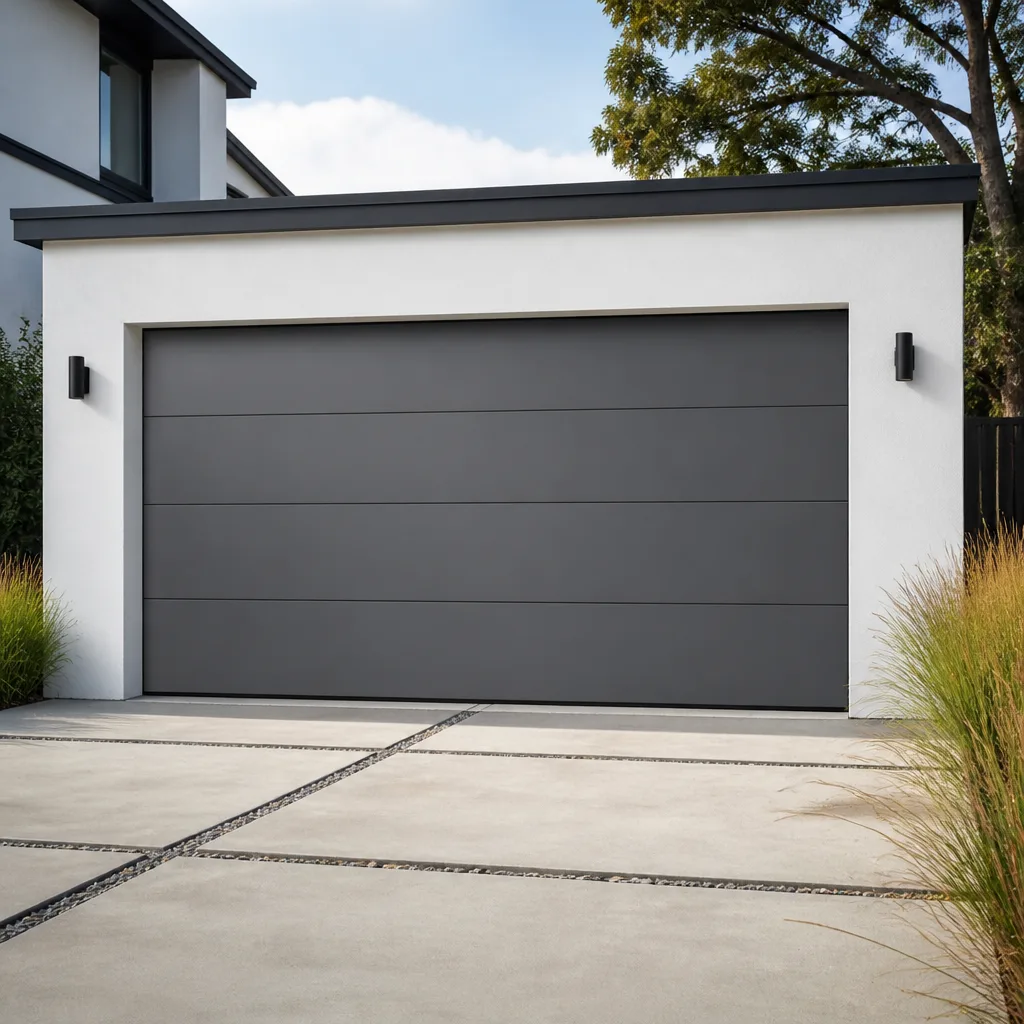 Modern flush
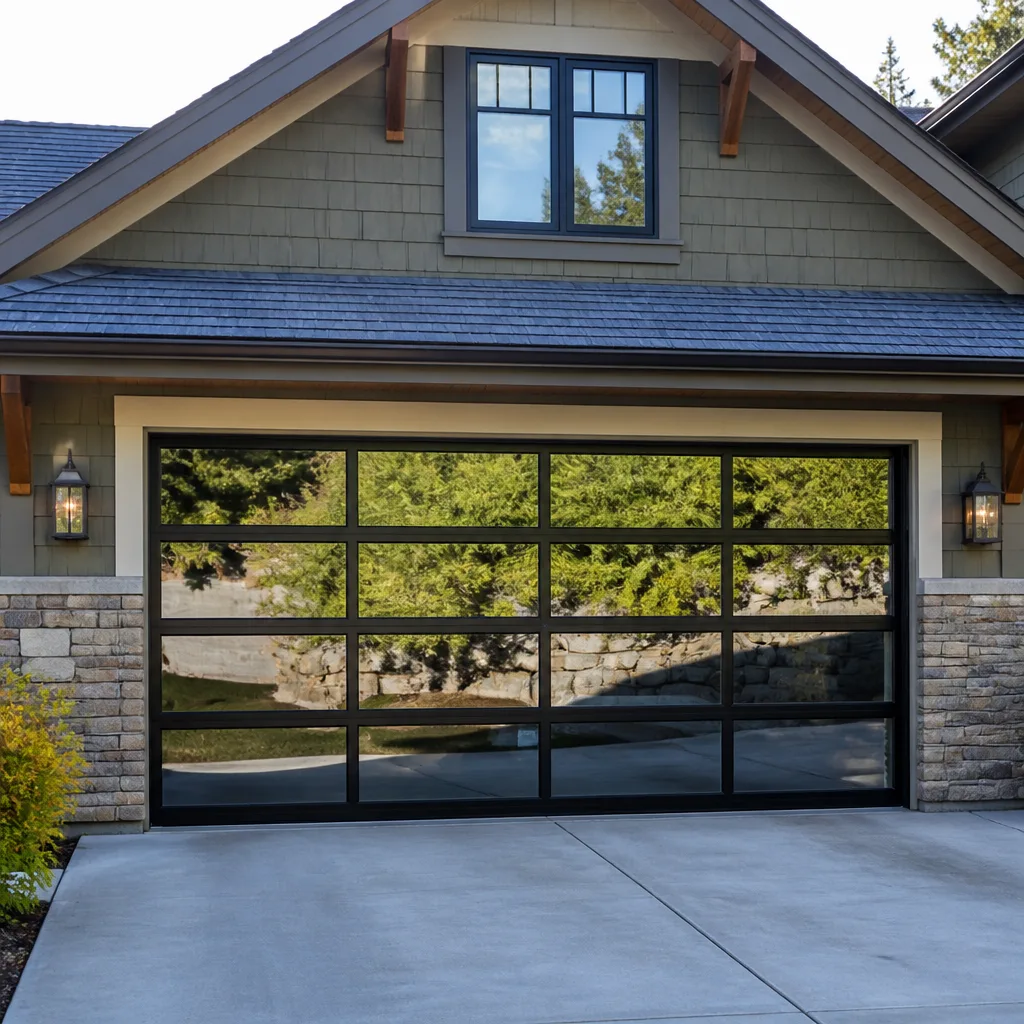 Full-view glass
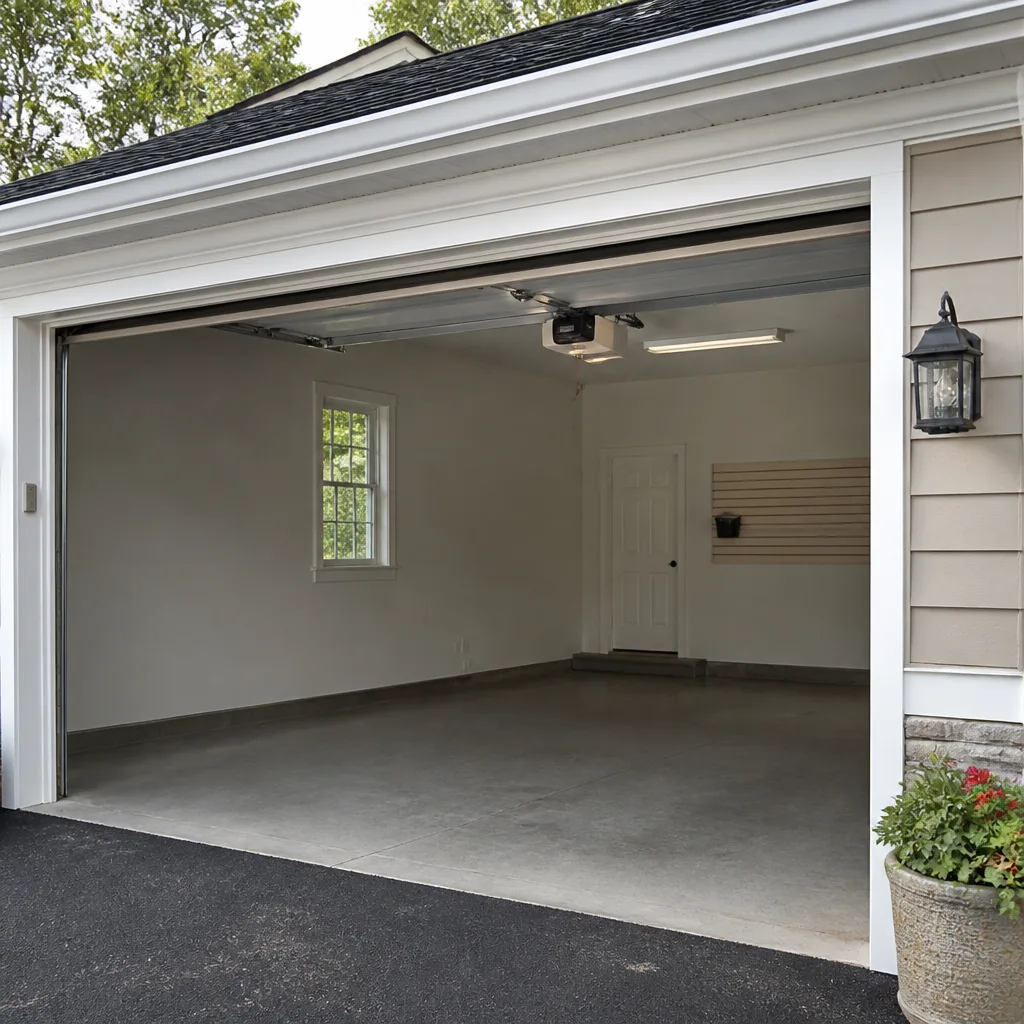 LiftMaster openers
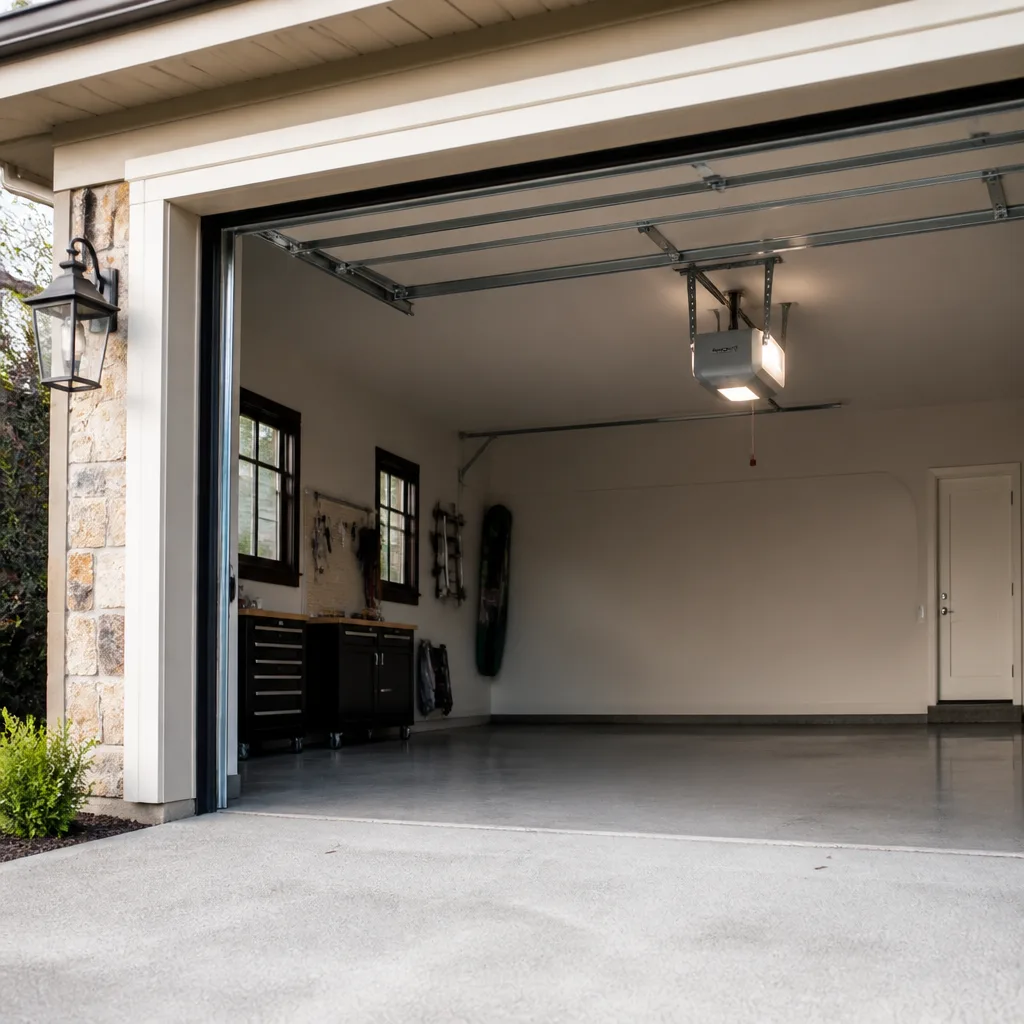 Chamberlain openers
Full 25-point door and opener safety check with every visit - springs, cables, rollers, tracks, and your LiftMaster or Chamberlain opener included
You get a price before we start. It does not change when the pro arrives.
Get your free estimateGarage Door Warning Signs: A Manchester Homeowner’s Reference Guide
Most garage door failures don’t happen without warning. The door announces them first, in sounds, in movement, in small visual details that almost nobody knows how to read. That’s the part homeowners miss. A door that’s a little slower on a January morning, that shudders halfway up, that makes a sound it didn’t make last month – these aren’t random annoyances. They’re early signals, often weeks or months ahead of a breakdown. This guide teaches you to recognize those patterns in your own Manchester garage. You’ll learn which sounds mean normal wear, which mean schedule a visit soon, and which mean stop using the door right now.
Quick Answer
The most reliable garage door warning signs are a door that moves slower or jerks as it opens, a torsion spring that looks stretched or shows a visible gap, grinding or popping sounds during travel, and an opener that strains, reverses mid-travel, or clicks without moving the door. Any of these means the door needs a professional look. Sudden loud bangs, a door hanging crooked, or a snapped spring means stop using it immediately and call for service.
Styles & brands we work with
- Raised-panel steel
- Carriage house
- Modern flush
- Full-view glass
- LiftMaster openers
- Chamberlain openers
Table of Contents
- What your door’s sounds are telling you
- How to spot torsion spring wear before it fails
- Reading your opener’s behavior
- Connecticut weather signs unique to Manchester
- The severity framework: watch, schedule, or stop
- Cable and track warning signs
- A seasonal check routine for Manchester homes
- Common mistakes to avoid
What Your Door’s Sounds Are Telling You
A healthy garage door is a quiet machine. Once you know its normal sound, changes stand out. The key is sorting ordinary wear from signals that mean a part is failing. Here’s how to split the two.
Sounds that usually mean normal wear
- Faint squealing during travel. Rollers and hinges dry out over time. A light squeal that comes and goes is usually a lubrication issue, not a failing part.
- A soft hum from the opener itself. Motor noise is expected. The opener shouldn’t sound like it’s working harder than the door needs.
- A gentle thud when the door closes. A door that lands with a soft thump is behaving normally, provided the bottom seal makes contact evenly.
Sounds that deserve a same-week service call
- Grinding. Metal-on-metal grinding usually points to worn rollers or a track the door is scraping against. Left alone, it accelerates wear across the whole system.
- Popping or snapping during the first few feet of travel. This often means a torsion spring is slipping or cables are under uneven tension. Popping is one of the signs we hear most often in Manchester homes before a spring lets go.
- A loud bang from inside the garage. That sound usually means a spring has already snapped. Stop using the door and call for garage door spring repair.
- Repeated clicking from the opener with no door movement. That’s a motor or gear problem, not a door problem, and it won’t fix itself.
Sound is the earliest signal most homeowners get. If you can’t place a noise, recording it on your phone while the door cycles makes it much easier for a technician to identify over a call.
How to Spot Torsion Spring Wear Before It Fails
Torsion springs sit horizontal above the door on a metal shaft. They carry the full weight of the door, and they’re the component most likely to fail first. You can learn a lot by looking at them from the ground, without touching a thing.
What a healthy spring looks like
A healthy torsion spring is a tight coil of evenly spaced wire loops. Each coil sits close to the next with no visible gap running down the length of the spring. The whole spring should look uniform from end to end.
What a worn spring looks like
- A visible gap in the coil. If a section of the coil has spread apart, the spring has lost tension and is on the way out.
- A stretch that seems longer than it should be. A stretched spring is a tired spring. It’s carrying less of the door’s weight, which pushes the load onto the opener.
- Rust or dark discoloration along the coil. Corrosion weakens the wire. A rusty spring can look fine one week and snap the next.
- A door that feels heavy when you lift it by hand. With the door in manual mode, a properly balanced door lifts with light effort. A door that feels like dead weight is telling you the spring isn’t doing its job.
Springs are under extreme tension and are genuinely dangerous to touch. Never try to adjust, lubricate or remove a torsion spring yourself. Readings from the ground are plenty – the repair belongs with a trained technician. In our experience across Manchester, a spring showing a visible gap is usually weeks from failing and should be replaced as a pair. A matched pair is replaced together because the two springs wear at the same rate.
Reading Your Opener’s Behavior
Your opener is a diagnostic tool if you know the patterns. Each behavior points to a different cause, and some are more serious than others.
Common opener patterns and what they point to
- Straining to lift the door. The opener is working harder than it should. Often the spring has lost tension and the motor is picking up the slack. It’s a door problem showing up as an opener problem.
- Reversing mid-travel. The door starts down and stops, then reverses. Safety sensors, a misaligned track, or an obstruction in the path are the usual causes.
- Clicking without movement. You hear the opener engage but the door stays put. This usually points to a stripped gear or a broken drive mechanism inside the opener.
- Only working from the wall switch, not the remote. The opener itself is fine. The problem is the remote, its battery, or the receiver.
- Random operation or interference. Older openers on crowded frequencies can trigger on their own. Smart openers from brands like LiftMaster and Chamberlain handle this better through rolling code technology.
Brand matters when you call
Not every opener needs replacing. Plenty of older units can be repaired if the technician works on the brand. This is where brand fluency saves money. We work on LiftMaster, Chamberlain, Genie, Craftsman, Raynor, Wayne Dalton, Clopay and Amarr, which means the system already in your garage is the one we service. If a full replacement makes more sense than a repair, that’s a conversation to have with an estimate in hand. For opener issues specifically, see garage door opener repair.
Connecticut Weather Signs Unique to Manchester
Manchester sees a real four-season cycle, and garage doors respond to it. Some warning signs only show up here because of the climate, and they’re easy to misread as normal.
Frost heave and track alignment
When the ground freezes and thaws through a Manchester winter, the concrete slab under the garage can shift slightly. That movement pulls the door tracks out of alignment. Watch for a door that suddenly rubs one side of the track, a gap at the bottom corner, or a door that doesn’t sit level when closed. Frost heave doesn’t break the door – it bends the frame around it, and the door follows.
Humidity and wood doors
Summer humidity swells wood panels and frames. A wood door that sticks in July and closes fine in October is telling you it’s absorbing moisture. Left alone, that swelling warps panels and stresses the hinges. Sealing the door and keeping the tracks clear helps, and a technician can check whether the frame itself has moved.
Cold-weather stiffness
Grease thickens in the cold. A door that feels stiff on a single frosty morning is often just under-lubricated. A door that stays slow for days is a spring losing tension. The difference matters: one needs lubrication, the other needs garage door repair.
Ice at the bottom seal
Freeze-thaw cycles leave ice under the bottom seal. When the door comes down on ice, the safety reverse can trigger and the door bounces back up. Clear any ice from the threshold before you assume the opener has failed.
The Severity Framework: Watch, Schedule, or Stop
Not every warning sign carries the same urgency. Use this three-tier framework to decide what to do in the moment.
Tier one – Watch
Note it and check back in a month.
- Faint squealing during travel
- Minor vibration in the door panels
- A button or remote that needs a firmer press
- Light rust on the bottom brackets
Tier two – Schedule service soon
Book a visit within the week. The door still works, but a part is going.
- Grinding or popping during travel
- A door noticeably slower than last season
- A torsion spring with a visible gap or heavy rust
- An opener straining or reversing intermittently
- Tracks the door rubs against
Tier three – Stop using the door now
Leave the door where it is and call.
- A loud bang from the spring area
- A door hanging crooked or off one track
- A snapped or tangled cable
- An opener that clicks but the door won’t move
- Any door that falls rather than lowers
Tier three is where DIY work gets people hurt. Cables are under hundreds of pounds of tension, and a door with a broken spring can drop fast and without warning. Call a trained technician rather than trying to bring the door down manually. If it’s a tier-three failure, we answer the phone and get you booked. Call (888) 315-6660. We answer 24/7. Fast dispatch from 7am to 7pm, Sunday through Friday.
Cable and Track Warning Signs
Cables and tracks wear quietly, so they’re the parts homeowners miss most. A few visual checks from a safe distance catch most problems early.
Cable signs
- Frayed strands at the drum. Look at the top corners of the door where the cables wrap around the drum. Frayed wire means the cable is close to breaking.
- A slack cable on one side. One cable hanging looser than the other is out of tension. It usually follows a spring failure.
- Cables crossing or tangling. This is a stop-using sign. Even one crossed cable means the door is unbalanced.
Track signs
- A gap between the track and the wall. The track brackets have loosened.
- A bent or kinked section. Even a small dent catches rollers and accelerates wear.
- Rollers out of the track. If the door has come out of the track, don’t run the opener. It’ll make a bad situation worse.
Track alignment and cable replacement both come up often in Manchester around the spring thaw, when the ground moves and doors shift with it. Both are jobs for a technician – the tension in a garage door system doesn’t leave room for experimentation.
A Seasonal Check Routine for Manchester Homes
The best protection against a snapped spring is a short check you repeat through the year. Four times a year is enough, and each one takes about ten minutes.
Spring
- Walk the length of both tracks. Check for gaps, dents and loose brackets.
- Run the door up and down. Listen for grinding or popping you didn’t hear in winter.
- Check the torsion spring for any visible gap in the coil.
Summer
- For a wood door, look for swelling, cracking or warping along the bottom edge.
- Clear the safety sensors and wipe the lenses on the opener. A dirty sensor is the most common reason a door reverses.
- Test the safety reverse by placing a small object under the door and confirming the door reverses on contact.
Fall
- Lubricate rollers, hinges and springs with a garage-door-appropriate lubricant.
- Clear the threshold of any debris and ice buildup before the first freeze.
- Check the door balance by disconnecting the opener and lifting the door by hand.
Winter
- Clear snow and ice from the bottom seal and the threshold before every use.
- Watch for a door that’s suddenly slow on cold mornings, and note whether it recovers.
- Check the spring condition again. Cold stress is when tired springs fail.
If a check surfaces something you can’t identify, the phone is faster than guessing. Call (888) 315-6660. We answer 24/7. Fast dispatch from 7am to 7pm, Sunday through Friday, and estimates are free.
Common Mistakes to Avoid
- Greasing a torsion spring to quiet a popping sound. Lubricating a failing spring masks the noise without fixing the tension loss. It delays the repair and increases the risk of a snap.
- Assuming a slow door is just cold. In Manchester, one slow morning is weather. Three slow mornings mean the spring is losing tension. Treat the pattern as the signal, not the single event.
- Adjusting the opener force setting to compensate for a heavy door. Raising the force setting pushes a worn motor harder and makes eventual failure worse. A heavy door needs a spring repair, not an opener adjustment.
- Replacing one spring of a matched pair. Both springs wear at the same rate. Replacing one leaves the older spring as the next failure.
- Trying to lift a broken door manually. A door with a snapped spring can weigh several hundred pounds. Lifting it by hand risks injury and can drop the door without warning.
- Ignoring track misalignment after a freeze. Frost heave is routine in Connecticut, and a bent track is a routine consequence. Left alone, it wears rollers and stresses the springs on one side.
- Calling a generalist for a spring job. Garage doors are their own discipline. Someone who splits their attention across several trades is the wrong call for cables and springs.
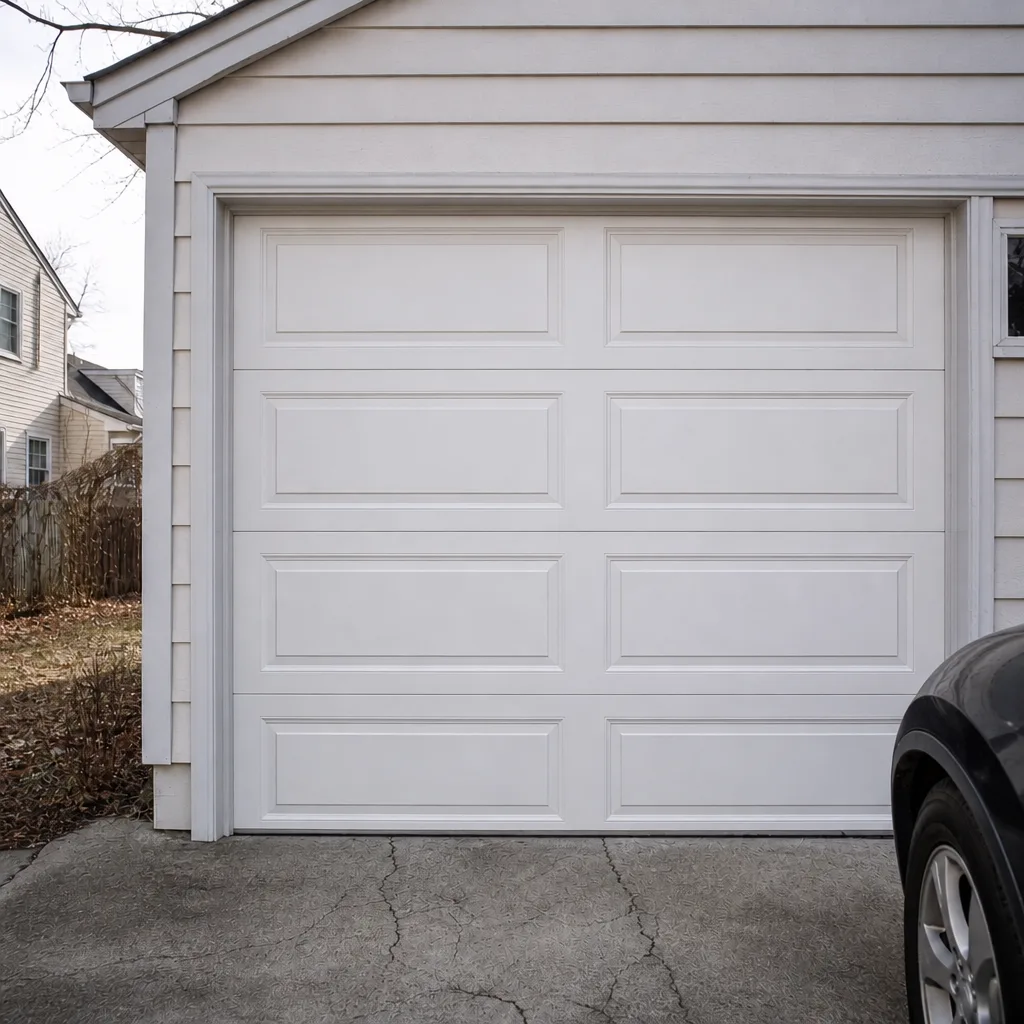
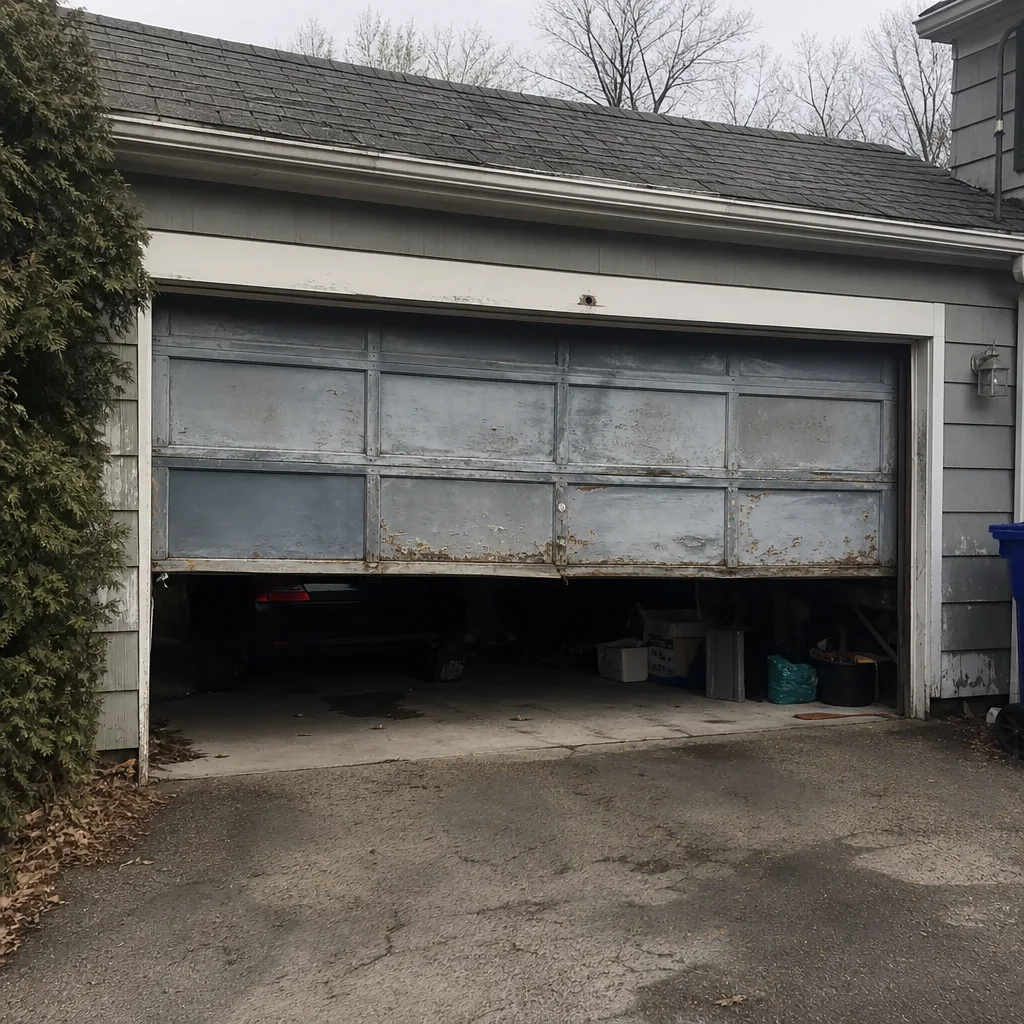
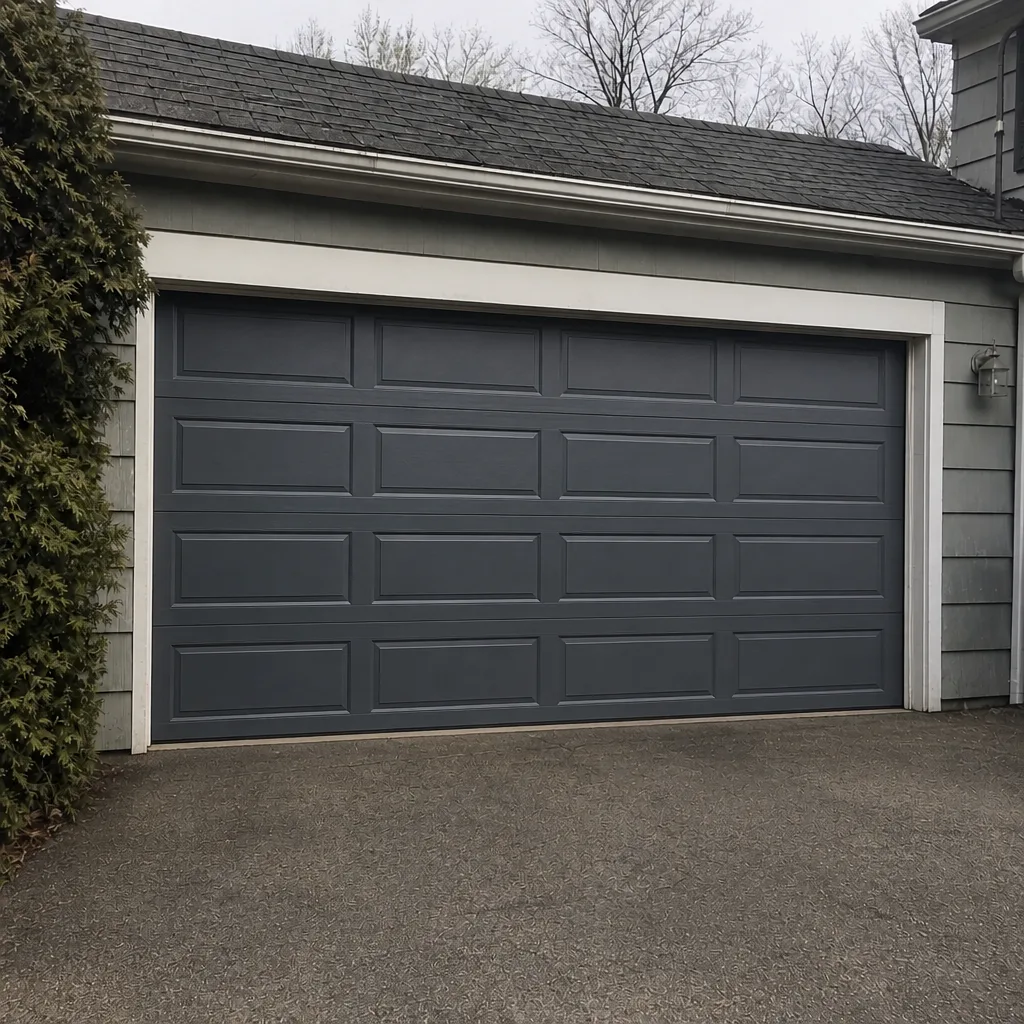
See the difference
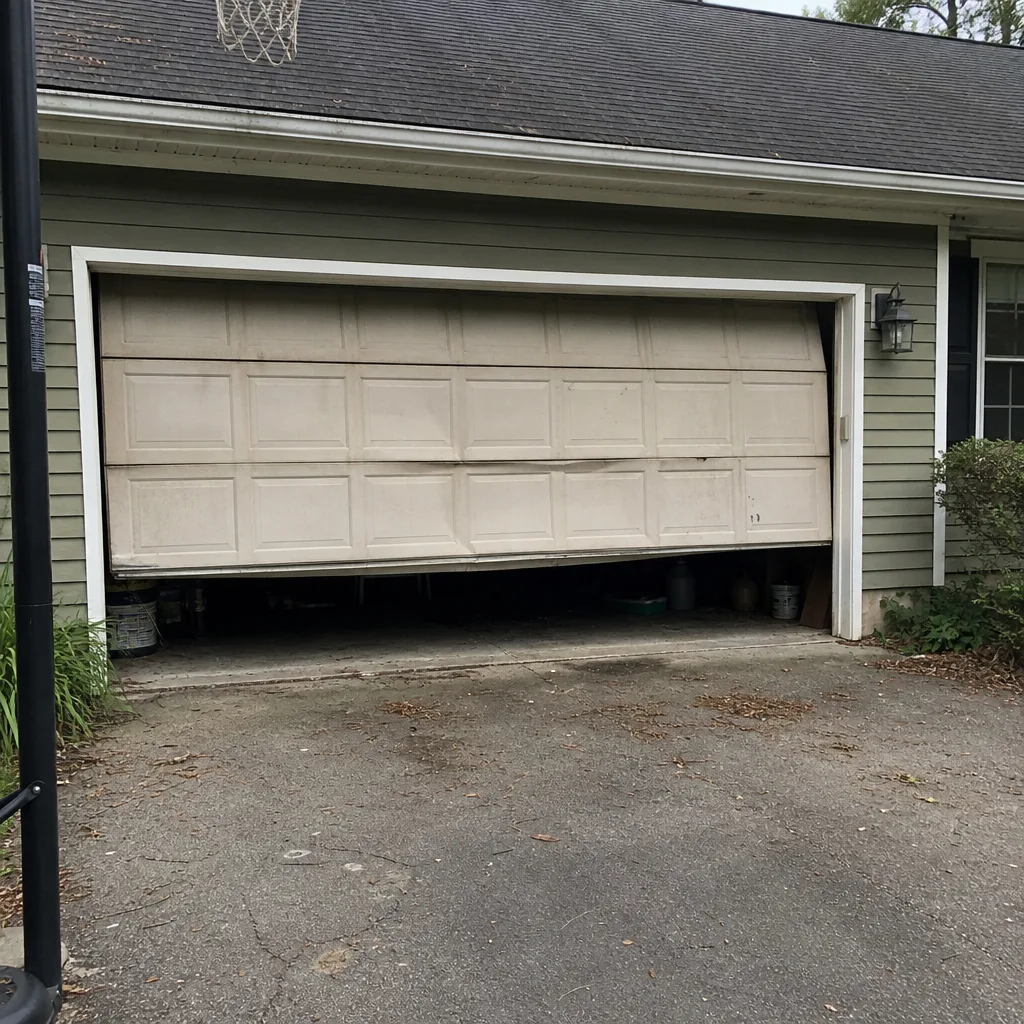 Before
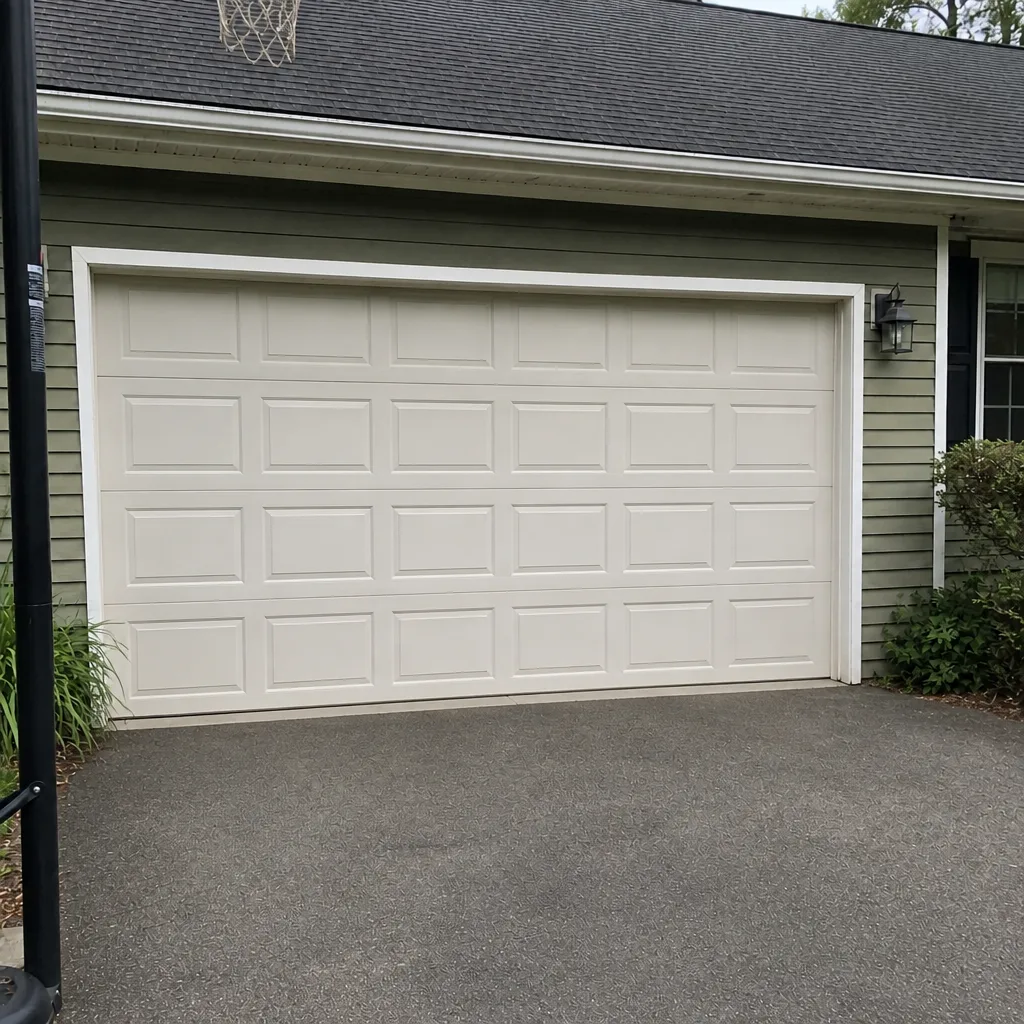 After
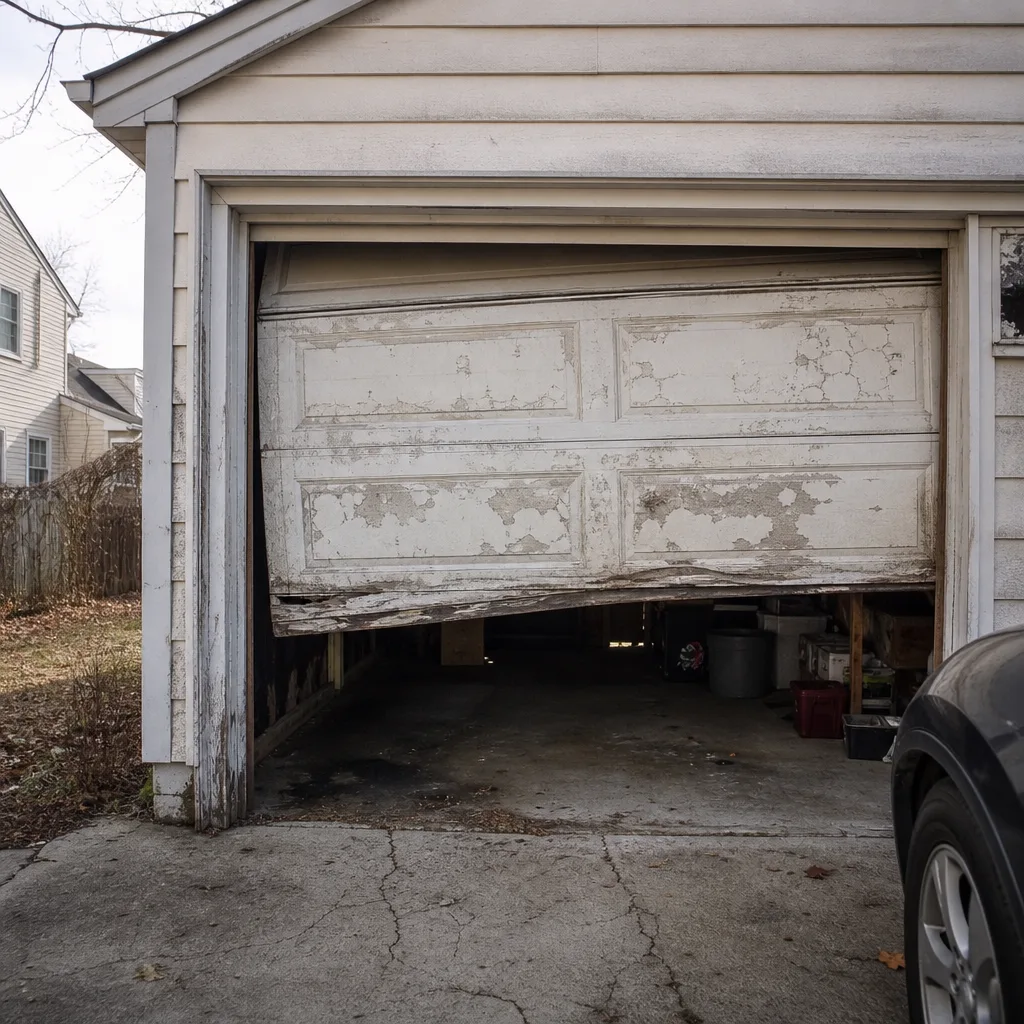 Before
 After
 Before
 After
When to Call a Professional
Some problems resolve with a lubrication and a sensor wipe. Others need a trained technician, and the warning signs above tell you which. Call a professional if you notice:
- A torsion spring with a visible gap, heavy rust or a loud bang
- A door that moves slower than last season or feels heavy by hand
- Grinding, popping or metal-on-metal noise during travel
- An opener straining, reversing, or clicking without movement
- Tracks bent, loose or out of alignment
- Cables that are frayed, slack or tangled
- A door hanging crooked or out of one track
Any of these is worth a free estimate in Manchester. Manchester Garage Door Repair Co offers free estimates in Manchester – call (888) 315-6660. We answer 24/7. Fast dispatch from 7am to 7pm, Sunday through Friday, and emergency garage door service is available when a door fails outside those hours. Garage doors are all we do, which means they’re all we think about.
Frequently Asked Questions
A door that’s slow or heavy on cold mornings, a torsion spring with a visible gap in the coil, and popping sounds during the first few feet of travel. Any of these usually means the spring is losing tension and should be inspected within the week. Call (888) 315-6660 for a free estimate.
An inspection and estimate are free. The repair itself is quoted per job by a written estimate before any work begins, and the price you agree to is the price you pay. Call (888) 315-6660 and we’ll book a time, Sunday through Friday, 7am to 7pm.
No. Stop using the door and call for service. A door with one broken spring is unbalanced, and running the opener can drop the door or damage the motor. If your door has failed after 7pm or on a Saturday, call and we’ll book it into the next opening.
Most often a misaligned safety sensor or an obstruction on the track. If the sensors are clean and clear and the door still reverses, the issue is likely the track, the spring balance or the opener itself. That’s a service call, not a remote-control fix. Call (888) 315-6660.
Yes. We work on LiftMaster, Chamberlain, Genie, Craftsman, Raynor, Wayne Dalton, Clopay and Amarr, so the older opener in your Manchester garage is the one we service. Repair often beats replacement when the right technician is on the job.
It varies with the part. A worn roller can go months. A spring with a visible gap is often weeks away from failing, sometimes less. The safest approach is to treat a gap or a snapped sound as a call-now signal, and a squeal or a slow door as a call-soon signal.
The Bottom Line
Your garage door tells you what’s coming. The trick is knowing the language: squeals that mean wear, poppings that mean tension loss, slow mornings that mean a tired spring, and gaps in the coil that mean weeks not months. Separate tier-one annoyances from tier-three failures, and you’ll catch nearly every problem before it turns into an emergency. The framework in this guide works for any door in Manchester, from the newest smart opener to a thirty-year-old Raynor on a frost-heaved slab. When you can’t place a sign, call. Manchester Garage Door Repair Co – free estimates, a written price before work starts, and technicians with up to 9 years of experience on your side of the door.
Call (888) 315-6660 for a free estimate. We answer 24/7. Fast dispatch from 7am to 7pm, Sunday through Friday. Your door. Your brand. Our specialty.
Written by the team at Manchester Garage Door Repair Co.